
How to make your plants grow faster and more luxuriantly

Views : 3941
Author : SINCORE Lighting - Sunny
Update time : 2021-11-29 14:38:59
Grow seedlings inside
If you are growing plants outside, but you have to wait for spring, grow your seeds inside. Seedlings take between 4 to 12 weeks to sprout. If you let them sprout inside and then transplant them into your garden, the plants will grow 4-6 weeks earlier than if you had waited to plant the seed directly into the flower bed.
Gather a small group of containers that are 2–4 inches (5.1–10 cm) deep that have drainage holes.
Avoid fertilizers. Instead, use a mix of peat moss and vermiculite inside the container.
Let the plants set outside in their containers for a few hours each day. Do this for at least two weeks before you transplant them into the flower bed. This will help them acclimate to direct sunlight.
The best plants to transplant are tomatoes, peppers, eggplants, and melons. Some plants, however, do not transplant well. These are zucchini, beans, beets, corn, spinach, turnips, and peas.

Talk to your plants and play music for them
Studies show that plants respond particularly well to being serenaded. When you are fertilizing the plant, talk or sing to the plant. Record your voice using a device such as a radio or tape recorder and play it to them while you're gone. This will help your plant grow faster.

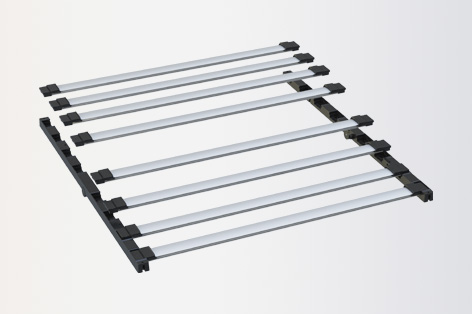
Use a led grow light
Use a grow light if you are growing your plant indoors. The best grow lights are high-intensity discharge lights (HID). HID lights come in two types: metal halide (MH) and high-pressure sodium (HPS). MH bulbs cast the strongest light in the blue end of the spectrum, which causes a compact, leafy growth. HPS bulbs last longer than MH bulbs and produce light at the red/orange end of the spectrum. MH bulbs cause a flowering growth.

Use coffee or tea grounds
Coffee or tea grounds help plants grow faster because of their caffeine. If you drink coffee or tea, put the grounds in your plant instead of throwing them away. The grounds are rich in nitrogen, which is a key nutrient in a plants diet. There have also been studies that suggest that caffeine helps the plant grow faster.


How to planting and growing home shallots
1. Prepare the bed as you would for garlic. Both like well drained soil with plenty of organic matter, neutral pH and good fertility. It is important that the cloves don't sit in soggy soil all winter or they will rot so planting in raised beds or on raised ridges in the soil will help.
2. After your first frost, plant the individual cloves 6 inches apart, pointy end up and 2 to 3 inches deep. They are eager to grow and will send up green shoots in 10 to 14 days.
3. Like most onions, shallots are shallow-rooted and easily heaved out of the ground during alternate freeze-thaw cycles that occur over the winter. To protect against this add a 6 inch layer of mulch over the plants after the ground has frozen. 4. Straw or shredded leaves work well and won't smother the early spring growth. It is up to you whether you want to remove the mulch in the spring or not. If you do remove it, you will have to keep up with weeding because their shallow roots don't compete well. If kept in place, you may want to thin it a bit so the new shoots can push through as they grow.
5. You can pull a few of the baby shallots from each clump to use as scallions in the spring if you wish; otherwise, wait till harvest time in mid-summer to enjoy them. Should your plants start to send up flower stalks in June, cut them off as you would garlic scapes to send energy back to making big bulbs.
6. Let the plants grow until the tops yellow and die back signaling harvest time! Your fall-planted shallots will be ready weeks before the spring-planted shallots and onions.
7. Gently dig up the clusters of bulbs, shake off the dirt, then place them on screens or wire racks in a dry shady place to cure for about a week.
8. Store in a cool, dry, dark place (not the fridge) for winter. Use the thick-necked ones first, since they will not store well. 
9. Note that these delicate shallots are not long keepers, so we enjoy cooking with them soon after harvest.

Be sure to save the biggest and best cloves to replant in the fall. Like garlic, they will adapt to your growing conditions over the years and give you great harvests each summer. One pound of sets should give you 40 to 50 cloves to plant. They are pricey, but as long as you save some to replant, you will never have to buy them again! 


Related News
Read More >>
Can ordinary LED lights be used as plant lights? Can ordinary LED lights be used as plant lights?
Aug .09.2022
Ordinary LED lights can illuminate plants, but the effect is not good. Plant growth, from photosynthesis to the production of nutrients, requires different wavelengths of spectral illumination at each time period, that is, the full spectrum of sunlight.
The development trend of LED plant lights The development trend of LED plant lights
Aug .09.2022
In traditional agricultural production, ordinary electric light sources are generally used to supplement light and agricultural technical measures such as the application of different covering materials are used to achieve rapid growth of plants to meet people's living needs.
LED Grow Light Market Prospects LED Grow Light Market Prospects
Aug .06.2022
Not long ago, Taga City, Miyagi Prefecture, Japan publicly demonstrated the world's largest LED (Light Emitting Diode) artificial light plant factory to the media. The factory, called "Future Hata", covers an area of ​​about 2,300 square meters and uses 17,500 LED lights.
The effect of photosynthesis on plants The effect of photosynthesis on plants


Aug .05.2022
Photosynthesis is the process by which plants use light energy to convert carbon dioxide and water into carbohydrates. Photosynthesis is the basis for the survival and development of life on earth. Light is the energy source of photosynthesis, and it is also a kind of signal information that controls the light quality, light intensity and photoperiod of plant development. Light is also an important environmental factor affecting the production of facility crops.