Re-envisioning the HPS Spectrum with LEDs
LEDs have thrust the concept of the spectrum to the forefront of horticultural thought. That's because they have the ability to precisely recreate individual colors of sunlight for research purposes — or to coax desirable traits from commercial crops. You may also hear colors of light referred to as wavelengths because each color has its own frequency, as measured in nanometers (nm). Blue light has a short wavelength of about 440 nm, while red light, at the opposite end of the spectrum, has wavelengths approaching 700 nm.
Savvy growers have always used spectrum control to craft better plants. The standard protocol has been to switch from a cool-colored metal-halide (MH) spectrum for vegetative growth to a warm-colored HPS spectrum for flowering. The MH spectrum contains plenty of blue light, which is critical for avoiding extension growth and increasing leafing; the HPS spectrum is red-dominant, making it perfect for flowering. But neither HPS nor MH could recreate sunlight, and their spectrums couldn't be modified because the gases in their lamps determined their color.
Yet LEDs can reproduce both these HID spectrums and more. Though LEDs could theoretically create any spectrum, early LED designs abandoned what worked for HID lights in favor of polarized blue/red spectrums. And some of those designs persist to this day. It's true that plants have a strong photosynthetic response to blue and red light, but such extreme spectral designs completely neglect the middle wavelengths of green and yellow. Many of the manufacturers of these so-called “purple” LEDs claimed to have magic spectrums for quality plants flower. But, actually, the incomplete spectrums typically yield disappointing harvests, particularly at lower light intensities.
Now, LED fixtures are engineered to contain all the spectra needed throughout the growing cycle, and spectrum manipulation is less extreme. You may see lights that have a mildly purple-ish appearance — such as the Heliospectra ELIXIA series — yet those fixtures actually include sufficient green and yellow light to fulfill all of your plants' needs. To see the spectrum that a light is truly producing, it's critical to reference the accompanying spectrum chart. The colored curve you'll find there will show if the middle wavelengths of green and yellow are present — or lacking.
Moreover, modern LED spectrums eliminate the need to change from HPS to MH mid-crop cycle, and some fixtures offer tunability. Tunable fixtures enable growers to subtly change the colors and ratios of color in their spectrums throughout the growing day or season.
The Pros (and Cons) of LEDs for plants
LED Pro: Higher Efficiency
LEDs are far more efficient than HID lighting. Pound-for-pound — or rather kilowatt-for-kilowatt — they produce more light than HPS fixtures. The diodes of an LED fixture are inherently superior at converting electricity into light. That means you'll have a lower electrical bill and you might not need as many fixtures to provide the same amount of light.
Along with better electrical efficiency comes better efficacy. A tailored LED spectrum provides plants with what they need for increased growth on a per-kilowatt basis. With an optimized spectrum and strong light intensity, plants yield more salable material, which fetches higher prices because of its enhanced quality.
LED's lower electrical consumption reduces carbon emissions too. This environmental benefit has prompted many governments to offer a rebate credit for switching to LEDs, so check with your local jurisdiction.
LED Pro: Reduced HVAC Requirements
Because LEDs create much less heat than HPS, air-conditioning costs fall by as much as 30-40 percent when you make the switch. If you're designing a facility from the ground up, your designer can specify a smaller HVAC system, thus lowering your capital expenditures.
Unlike HPS, the LED spectrum does not contain infrared light. Infrared, which is radiant heat, increases leaf temperature. With a lower temperature at the leaves, you can run higher room temperatures for a significant savings in HVAC costs. Lower leaf temperatures can help mitigate pests and mold, too.
LED Pro: Longevity and Low Maintenance
Unlike HID, LEDs won't need replacement every three or four crops, and they aren't susceptible to breakage. HID bulbs are delicate, and as growers know, they need to be handled with the utmost care to avoid costly breakage. The possibility of breakage — and the resulting release of metallic gases such as mercury — may violate European Good Manufacturing Practices and other standards. If you want to properly dispose of these lamps, you'll need to work with — and pay — a recycling facilitator.
LEDs, on the other hand, have exceptional durability and runtimes. Once hanging, LED fixtures provide 50,000 hours of runtime and frequently go for ten years before needing replacement. IP-rated waterproof fixtures are easy to clean, and the individual diodes are encased in polymer — not glass — which makes them the most durable lighting solution available today. If your fixtures have an IP-67 rating, you can spray them with a hose between production cycles.
LED Pro: Vertical Growing and Dimmability
Because LEDs have very little infrared in their spectrum, they can be hung close to the crop, which opens the door for vertical cultivation and lets you make the most of your square footage. Multiple LED light bars can be placed across the crop without the hotspot characteristic of HID technologies. And unlike HPS lights, LEDs are dimmable without a loss in efficiency, which means you can slowly increase your light intensity throughout the crop cycle while staying cost-effective.
LED Con: Higher Upfront Costs
Prospective buyers of LED lights may encounter sticker shock if they're only familiar with HID lamps. The manufacturing processes and materials needed to create LED fixtures simply come at higher costs than those used for HID lamps. Despite lower lifetime costs, LED fixtures cost more than HPS upfront. For some growers, this makes LEDs a no-go, even though the longer runtimes and ease-of-use features payoff the investment several times over.
LED Con: Light Spacing
Light from LEDs typically has a tight footprint similar to a spotlight. The beam angle of HPS lights, by comparison, is broad, which makes them easier to space in a greenhouse. Though the tight footprint of an LED light is great for narrow tables, overlapping the illumination area can be tricky, especially in greenhouses. Secondary optics (i.e., a lens plate over the diode array) can evenly distribute photons and ensure light uniformity over a broader area.
LED fixtures vary in terms of their beam angles, so it's important to understand how they provide light for your plants. For large installations, make sure you work with an LED company that has a qualified lighting designer.
LED Con: Changes to the Dehumidification Plan
Growing with LEDs is different. LED lights lower the cooling load in the grow room while increasing the dehumidifcation needs. That's because the room is naturally cooler with LEDs, yet photosynthesis — and evapotranspiration — remain about the same. Plant's still transpire because the stomata are open for CO2 exchange, and they still release moisture into the air.
Your first crop with LEDs may entail some unexpected humidity levels. Relative humidity increases as the temperature drops, so more dehumidification may be necessary. Make sure to keep an eye on your relative humidity and vapor pressure deficit throughout the crop cycle.
How Do HPS Grow Lights Work?
Dimmable HPS grow light bulb.HPS lamps, or high pressure sodium lamps, are powered by ballasts that heat chemicals such as sodium, mercury, and xenon inside of the grow bulbs in order to give off light.
The chemicals in HPS grow lights are contained within a narrow arc tube with high pressure inside — hence the “high pressure” name. This arc tube is usually made of aluminum oxide ceramic in order to resist corrosion from the sodium.
The ballast is typically started with a pulse from an ignitor, sending high voltage energy through the arc tube. Xenon gives these lights some blue color, but they generally have low levels of this wavelength, so they're not the best for vegetative growth. However, HPS lamps do offer a lot of yellow, red, and far-red in their spectrum, making them a great option for flowering plants.
What Are the Benefits of HPS Grow Lights?
There are many unique benefits to using HPS grow lights over LEDs.
HPS Grow Light Cost: HPS lights are much less expensive than LEDs out of the gate. This can make them an especially good option for less experienced growers or beginners who don't want to put down a lot of money to get started.
HPS Lights Have Adjustable Light Intensity: HPS grow lights are typically also dimmable. This is definitely a plus when you consider the fact that dimmable LED lights are even more expensive than the regular kind.
HPS Grow Light Reflectors: HPS lights also have a number of different reflectors available for various types of coverage, so there's an option for nearly anything you're looking for.
Air Cooled Tube Reflector: An air cooled tube is small but powerful. Its compact size doesn't change the fact that it gives you a wide range of coverage.
Air Cool Hood Reflector: This is another great option. Air cool hoods have a domed design that gives maximum canopy penetration. And while it can reach high temperatures, it's complete with a glass insert and 6-inch exhaust port — so you can use a duct fan to ensure your grow room stays cool.
Air Cool Tube Hood Reflector: This type of grow light hood combines the power of a cool tube with the coverage of a cool hood. With an air cool tube hood reflector, your plants will get great light intensity over a wide area.
What Are the Challenges of HPS Grow Lights?
Air conditioner for climate control in a grow tent.While both choices of grow lights come with their own benefits, they also offer some unique challenges. First, let's take a look at some possible complications with HPS lights to keep in mind when you're choosing the right option for your grow room.
HPS Grow Light Heat: Like we mentioned earlier, one of the biggest risks that comes with using HPS grow lights is the fact that they run much hotter than LEDs. This puts your grow room at risk of overheating, so you'll probably have to use grow room fans to increase airflow and regulate temperatures.
HPS Grow Light Costs Over Time: Intense heat and additional cooling equipment mean higher power costs. So if you're looking to save on your bills, HPS grow lights may not be the best option.
HPS Lights Aren't Ideal for Vegging: While HPS lights are more affordable than LEDs, you'll also want to buy an MH grow bulb. HPS lights generally don't have the best wavelengths for vegetation, so MHs help with vegging. If you're really looking for the best and most effective spectrum for vegging and flowering, LED lamps might be the way to go — they'll give you the exact spectrum you need in one bulb without sacrificing efficiency.
How Do LED Grow Lights Work?
LED (light emitting diode) lights are another option for indoor growers. LED grow lights are electronic-based.
These lights are made up of LED chips, which, when combined with the lenses that cover them, create the diodes. The chips are made of two different semiconductor materials:
Electrons, which have a negative charge.
Holes, which have a positive charge.
Once voltage is applied, an electric current flows through the light — that causes electrons and holes to collide in order to release energy (light).
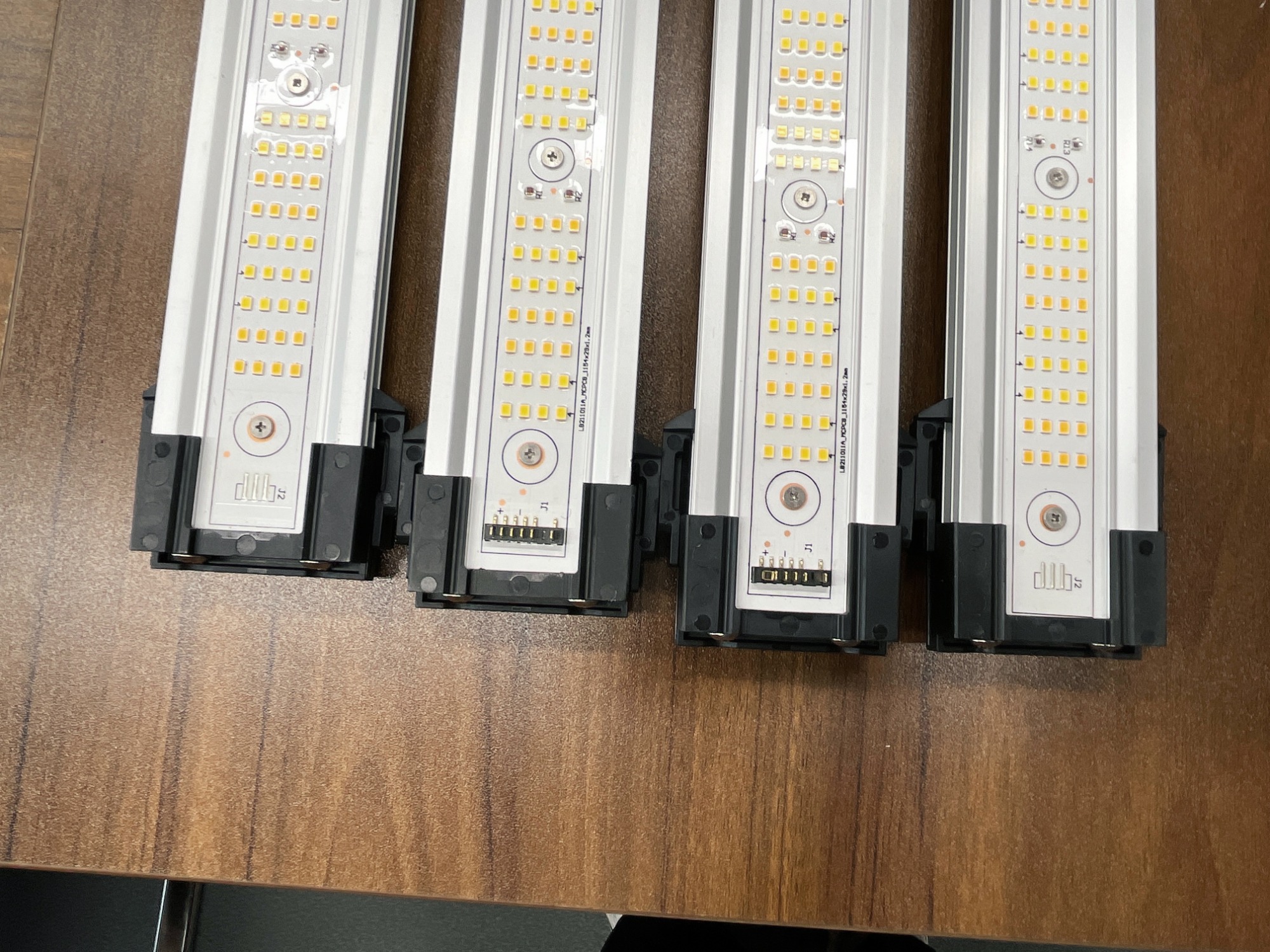
The lenses of the diodes are what direct the light from the chips, and these lenses can be tinted to change the color of the light by determining how much of which colors pass through. LED lights also come in a range of wattages and styles.
Traditional Panel LED: A traditional LED light is pretty compact compared to the other types. These typically feature small to medium wattage diodes.
Spread Style LED: This type of grow light is a larger option and is made up of small LEDs that are spread over a wide area.
COB LED: COB (chip on board) grow lights are made up of just a few (or sometimes just one) chip on board bulbs, which are made up of tiny chips covering a small area. These feature strong lenses that give plants great, direct maximum light.
Due to the range of lenses that control the color of their light, LED grow lights have a very flexible wavelength spectrum, which will vary from model to model. LEDs can offer a range of different color spectrums in the visible, infrared (IR), and ultraviolet (UV) ranges.
What Are the Benefits of LED Grow Lights?
Like HPS lights, LED grow lights offer their own set of unique benefits that make them great for many growers.
LED Light Wavelengths: One of the biggest benefits of using LED lights is the fact that they're very flexible when it comes to the types of wavelengths they offer.
There are LED lamps that can cover every stage of the grow cycle, ranging from single colors (like all red, all blue, or all white) to combinations of wavelengths to make up the perfect recipe for your indoor garden. This is a variety that HPS can't provide.
LED Grow Light Temperatures: LED lights run cooler than HPS grow lights do, which means you'll need less ventilation equipment overall — this is a big plus if you're looking to save on your electric bill.
Cooler-running lights will also help you avoid the risks and complications that excessive heat in your grow room can lead to. Dimmable LEDs are also available, though it's worth mentioning that these are a bit pricier than other LEDs and HPS lights.
What Are the Challenges of LED Grow Lights?
Now let's discuss some of the challenges you might encounter when growing with LEDs.
Overwhelming LED Light Options: The fact that LEDs offer a range of different uses and light wavelengths can definitely be a benefit. That said, it can also make it really difficult to choose the right one.
There are so many types of LEDs out there: traditional, COB, spread, multi-band, single-band, supplemental, and primary lights… the list goes on! Figuring out which LED grow light is right for you and your grow room will take a decent amount of research and effort.
High Light Intensity: LEDs are much brighter and more intense than HPS lights when it comes to lumen output. While this can be a benefit, it also puts your plants at risk of bleaching. As such, you'll have to hang these lights higher than HPS grow lights in order to avoid this issue.
Raising your LEDs to avoid bleaching your plants can be tricky — if you hang them too high, your plants won't benefit from their light intensity, sacrificing growth. Though HPS lights run similar risks, their dimming features make them easier to work with. That said, an LED like the 600 Watt Advance Spectrum MAX LED Grow Light Bar, which has dimming options, will give you the intensity you need without risking hurting your grow.
So What's the Best Grow Light Option?
At the end of the day, both HPS grow lights and LED grow lights will give you great results — especially if you have a good overall handle of your grow room.
Both types of grow room lights come with some give and take. That said, anyone with the knowledge and dedication to make their grow room succeed can get great yields using either HPS lights or LED lights.
Ultimately, though, HPS grow lights are generally the better choice for most growers.
Although their sometimes intense heat may cause a rise in your power bill, their introductory price point and the great amount of light intensity they offer will make up for it — especially when you see the great, big yields they'll give you!
It's also worth noting that HPS lights helps plants in the flowering stage thrive.
This is due to the wavelengths used by HPS grow lights that LEDs can't provide.
Not to mention, if you're growing plants that benefit from warmer temperatures, the heat that HPS lights can give you make them the way to go.
Studies have also shown that while MH bulbs are the optimal light for the vegging stage, HPS grow lights tend to have enough blue spectrum MH uses to grow plant just fine with a flowering bulb.
That's not to say you should dismiss LED grow lights altogether, though. LEDs offer plenty of benefits that make them excellent choices for any grow room.
Full spectrum LED grow lights, for example, can give you identical- if not more beneficial- spectrums to HPS grow lights.
For the most part, their yields aren't much different than what you'd get with an HPS light.
Of course, there's the fact that they tend to save you money on electricity, which is beneficial to your wallet and your grow.
Just be aware that you will have to hang LED lights higher to avoid bleaching your plants. In addition, due to the fact that LEDs don't put off heat like HPS lights do, they're more susceptible to cold snaps. As such, if you're using LEDs, be sure to keep your grow tent or grow room well-insulated.
 Can ordinary LED lights be used as plant lights?
 The development trend of LED plant lights
 LED Grow Light Market Prospects
 The effect of photosynthesis on plants

Mobile official website