Small-scale farming systems already grow 50% of our food calories on 30% of the agricultural land. When access to inputs and conditions are equal, smaller farms tend to be more productive per hectare than much larger farms.
Family farmers have a vested interest in protecting the fertility of their soil and the long-term productivity of their land. They are also more likely than larger farms to grow a wide variety of crops, contributing to agro-biodiversity.
IFAD’s experience shows that when given the opportunity, small-scale food producers are quick to invest and grow their business. Even in situations as complex as the Sahel, these investments yield results.
Last year, on a visit to Mali, I met a young farmer and entrepreneur named Nouhoum Sidibé. Nouhoum had been saving his money to migrate to Europe when he heard about an IFAD-supported project aimed at empowering young women and men in rural areas. With a loan and training, Nouhoum was able to start a poultry business.
He began with just 10 chickens. Today he is raising 3,500 chicks five or six times a year and employs seven people. In a country where average salaries are $1,500, his annual income is more than $12,000. He is investing in his business and community instead of saving up to leave.
Every year, IFAD-supported projects raise the production of 15 million small-scale producers and increase the value of sales of another 16 million, significantly raising the income of 20 million rural people.
What is the World Economic Forum doing to help ensure global food security?
Two billion people in the world currently suffer from malnutrition and according to some estimates, we need 60% more food to feed the global population by 2050. Yet the agricultural sector is ill-equipped to meet this demand: 700 million of its workers currently live in poverty, and it is already responsible for 70% of the world’s water consumption and 30% of global greenhouse gas emissions.
New technologies could help our food systems become more sustainable and efficient, but unfortunately the agricultural sector has fallen behind other sectors in terms of technology adoption.
Launched in 2018, the Forum’s Innovation with a Purpose Platform is a large-scale partnership that facilitates the adoption of new technologies and other innovations to transform the way we produce, distribute and consume our food.
With research, increasing investments in new agriculture technologies and the integration of local and regional initiatives aimed at enhancing food security, the platform is working with over 50 partner institutions and 1,000 leaders around the world to leverage emerging technologies to make our food systems more sustainable, inclusive and efficient.
Fruits and Vegetables
plant growth tent and best led grow light for grow tent
Farming and Farm Income
American agriculture and rural life underwent a tremendous transformation in the 20th century. Early 20th century agriculture was labor intensive, and it took place on many small, diversified farms in rural areas where more than half the U.S. population lived. Agricultural production in the 21st century, on the other hand, is concentrated on a smaller number of large, farms in rural areas where less than a fourth of the U.S. population lives. The following material provides an overview of these trends, as well as trends in farm sector and farm household incomes.
After peaking at 6.8 million farms in 1935, the number of U.S. farms fell sharply until the early 1970s. Rapidly falling farm numbers during the earlier period reflected growing productivity in agriculture and increased nonfarm employment opportunities. Since then, the number of U.S. farms has continued to decline, but much more slowly. In the most recent survey, there were 2.02 million U.S. farms in 2020, down from 2.20 million in 2007. With 897 million acres of land in farms in 2020, the average farm size was 444 acres, only slightly greater than the 440 acres recorded in the early 1970s.
Technological developments in agriculture have been influential in driving changes in the farm sector. Innovations in animal and crop genetics, chemicals, equipment, and farm organization have enabled continuing output growth without adding much to inputs. As a result, even as the amount of land and labor used in farming declined, total farm output nearly tripled between 1948 and 2017.
Gross cash farm income (GCFI) is annual income before expenses and includes cash receipts, farm-related income, and Government farm program payments. GCFI is forecast at $486 billion in 2021, versus $347 billion (inflation-adjusted 2021 dollars) in 2001, with the increase across time largely because of higher cash receipts. If forecasts are realized, GCFI would increase 7.3 percent in 2021 relative to 2020, and would be the highest since 2014.
Gross farm income reflects the total value of agricultural output plus Government farm program payments. Net farm income (NFI) reflects income after expenses from production in the current year and is calculated by subtracting farm expenses from gross farm income. NFI considers both cash and noncash income and expenses. Inflation-adjusted net farm income is forecast to increase by 15.3 percent in 2021 to $113.0 billion—the highest since 2013. Inflation-adjusted farm production expenses are projected to increase by 3.5 percent in 2021.
Crop cash receipts totaled $192.2 billion in 2020. Receipts from corn and soybeans accounted for 43.4 percent of the total.
 Can ordinary LED lights be used as plant lights?
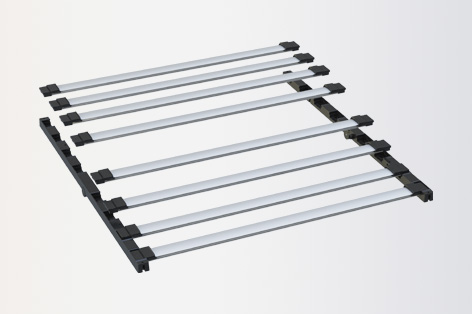 The development trend of LED plant lights
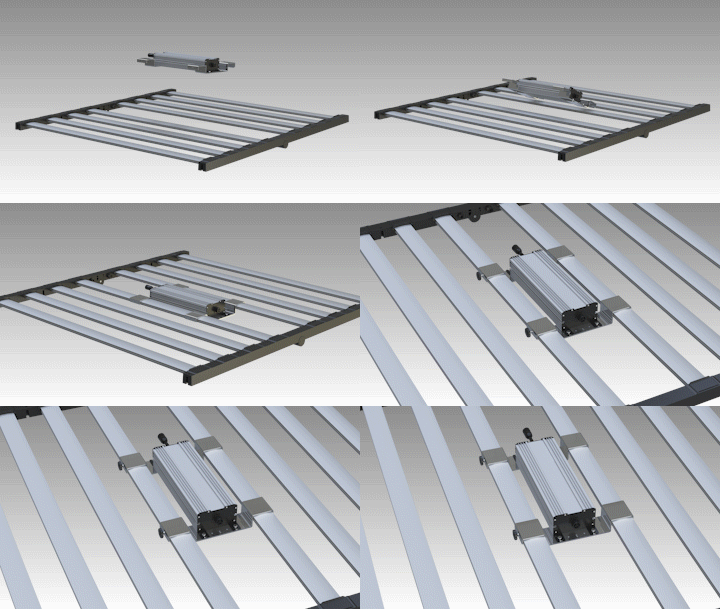 LED Grow Light Market Prospects
 The effect of photosynthesis on plants

Mobile official website