Light, Temperature and Humidity
Light is an essential factor in maintaining plants. The rate of growth and length of time a plant remains active is dependent on the amount of light it receives. Light energy is used in photosynthesis, the plant’s most basic metabolic process. When determining the effect of light on plant growth there are three areas to consider: intensity, duration and quality.
Light Intensity
Light intensity influences the manufacture of plant food, stem length, leaf color and flowering. Generally speaking, plants grown in low light tend to be spindly with light green leaves. A similar plant grown in very bright light tends to be shorter, better branches, and have larger, dark green leaves.
Day and Night:
Day length or duration of light received by plants is also of some importance. Poinsettias, kalanchoes and Christmas cactus flower only when days are 11 hours or less (short-day plants). Some plants only flower when days are longer than 11 hours (long-day plants), while others are not sensitive to day length at all (day-neutral plants).
Day Length:
Increasing the time (duration) plants are exposed to light can be used to compensate for low light intensity, as long as the plant’s flowering cycle is not sensitive to day length. Increased light duration allows the plant to make sufficient food to survive and grow. However, plants require some period of darkness to properly develop and should be exposed to light for no more than 16 hours per day. Excessive light is as harmful as too little.. When a plant gets too much direct light, the leaves become pale, sometimes burn, turn brown and die. Therefore, protect plants from too much direct sunlight during summer months.
Supplemental Light:
Additional lighting can be supplied with either incandescent or fluorescent lights. Incandescent lights produce a great deal of heat and do not use electricity very efficiently. If artificial light is the only source of light for growing plants, the quality of light or wavelength, must be considered. Plants require mostly blue and red light for photosynthesis, but for flowering, infrared light is also needed. Incandescent lights produce mostly red and some infrared light, but very little blue light. Fluorescent lights vary according to the amount of phosphorus used by the manufacturer. Cool-white lights produce mostly blue light and are low in red light; they are cool enough to position quite close to plants. Foliage plants grow well under cool-white fluorescent lights, while blooming plants require extra infrared light. This can be supplied by incandescent lights or special horticultural fluorescent lights.
Ideal Temperature and Humidity for Plant Growth in Grow Rooms
It’s well recognised that temperature and humidity are two of the main environmental factors which will determine your plants growth levels and overall health. Depending on which stage of the lifecycle your plant is at, will depend on the humidity and temperature levels that you should maintain.
Temperature, Humidity and Other Important Factors
There are typically three main temperature points of plant growth. These refer to the minimal, optimal, and maximum temperature.
Vegetative phase – 25 degrees Celsius and 60-70% humidity.
Flowering phase – 28 degrees Celsius and 40-50% humidity.
The biochemical process for growth depends on temperatures being kept within ideal range for photosynthesis to occur at optimal rates. If temperatures are above or below this range, the metabolic and biochemical process will slow down, ultimately slowing down the overall development of your crop. Within your grow space, we advise that you keep on top of all growth factors such as light, Co2 levels, water, temperature and nutrition. By optimising these, you will achieve maximised results from your plants.
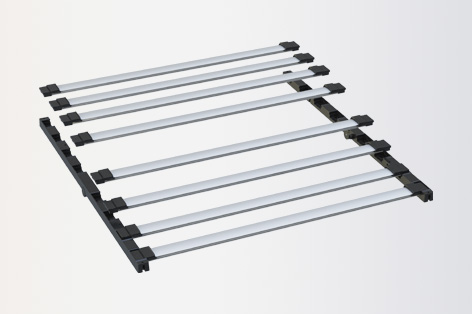
why not choose a favorite led grow light?
Links Between Temperature and Relative Humidity
Humidity refers to the amount of water vapour that can be measured in the air. Reduced humidity percentage in the air will cause water loss from your plant’s tissues. On the contrary, high humidity levels can cause microbial and fungal pathogens to develop,
In warmer temperatures, plants will close their stomata to decrease water loss and also help your plants cool off. When the temperature is too high, plants close their stomata to conserve water. If the stomata is closed, oxygen and carbon dioxide molecules cannot be moved throughout the cells, resulting in your plant suffocating on transpired gases and water vapours.
Instruments to Identify and Control Temperature in Grow Space
With the proper instruments, you can continuously collect and store the grow room temperature and humidity data. Products such as the GAS Enviro Controller and the Trolmaster Hydro-X enable you to adjust and set customised measurement intervals and monitor wide ranges of temperature and humidity levels. This is particularly useful as it gives you something for reference in the future which can highlight areas which you can improve. Alerts can be set when your set levels are exceeded to prevent deterioration of your plants.
Ventilation
Ventilation is another crucial element to take into consideration for successful plant growth. To remove excess heat, we recommend that you install extraction fans high inside your grow space.
Intake fans should be placed close to the ground, so cool air circulates through your plants’ leaves.
By having fresh air readily available to your plants, you’ll ensure a continuous supply of CO2, which is essential for the development of your plants. Depending on the conditions inside the grow space, you can set the fans to different speeds and maintain specific temperature levels.
Summary
In summary, we have learnt that you need to control temperature and humidity in relation to which stage of growth your plant is at. These factors will determine the photosynthetic rate of your plants, as well as other biochemical processes. To measure and control temperature and humidity levels in your grow space, you should opt for a thermometer and hygrometer, as well as a controller to increase/decrease airflow dependant on humidity changes.
With the right strategies and tools, you can create the perfect environmental conditions for your plants to grow healthy and strong. If conditions are optimised, you’ll achieve top-quality crops and heavy harvest yields.
The effects of soil type on plant growth
What are the effects of different soils (eg clay, potting mix, peat, sand, garden soil etc) on plant growth?
1) Fertility depends on:
minerals
pH
drainage
aeration
2) So, for each soil type, you need to find out about:
mineral content, mineral retention and release, mineral availability
pH and its effect on mineral availability
drainage and soil water (hygroscopic - capillary - gravitational) and closely related...
soil air and aeration
3) This will push your research further back to look at:
organic matter
silt - clay - sand
and how these components affect 2) and thereby 1)
4) Soil profiles and how these affect 1), especially drainage and aeration. However, none of your soils are "natural", so this section is not strictly applicable to your "soils".
Finally, it depends on what you want to use your soil for. Gardening books will explain that peat is best for some purposes, sand is often used for cuttings etc. Gardening books are full of recipes for the right soil for the right job and they usually explain WHY (this is best for free drainage .... this is best for plants that like an acid pH .... this is best for water retention etc).
I think you will probably spend most of your essay on looking at the principles laid out in 1 to 4 above and then finally relate it to the "soils" you have listed.
In summary, light, humidity, temperature, ventilation conditions and soil environment affect the growth and development of plants in different periods, different aspects, and different degrees.
 Can ordinary LED lights be used as plant lights?
 The development trend of LED plant lights
 LED Grow Light Market Prospects
 The effect of photosynthesis on plants

Mobile official website