LED Lights: The New Trend for Indoor Growers
The main selling point of LED lights is that they produce a powerful light spectrum without generating a lot of heat. Depending on the LED grow lights the user purchases and uses, it may not be necessary to invest in a fan exhaust system (this is generally recommended when growing in a closed environment, so that the plants have adequate airflow).
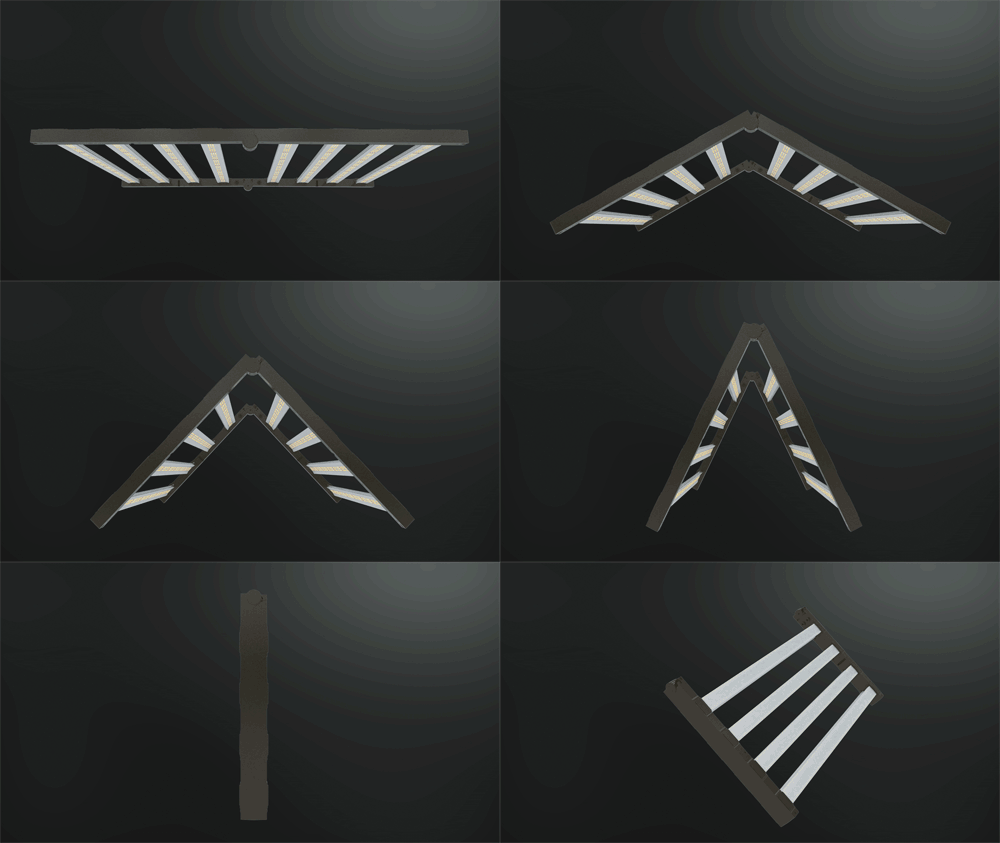
Another advantage of LED grow lights is the simplicity of setup. Typically, all a user has to do is plug these lights into an electrical outlet, hang them above plants, and turn on the device.
However, unlike fluorescent lights, LED lights are extremely potent on marijuana at close range. Therefore, when using LED grow lights, you need to have enough distance to avoid damaging the plant leaves, and how much distance you need to reserve depends on the intensity (power) of the LED lights.
The most common plant lights for growing plant today are full-spectrum, with wavelengths in the visible light range of 400 to 700 nanometers (nm), which drive plant photosynthesis.
What lights are not suitable for marijuana cultivation?
It is generally not recommended that users grow marijuana with ordinary lights. Unlike many other plants, plant requires extremely high light to reach its full growth potential. Since marijuana is a sun-loving plant, the light intensity generated by some lamps cannot provide enough sunlight for marijuana.

Incandescent bulbs are also not suitable for supplementing light for plant cultivation, because their light intensity is too low to meet the light needs of plant during the growing period.
When the heat is too high, "photoburns" can occur, and if left unaddressed, mild burns can greatly reduce the potency and purity of a plant strain.
When the plant is too close to the light source, some users may notice the leaves of the plant turn an unsightly yellow with brown or black edges. As the plant grows further, the terminal buds may turn an unhealthy white color. Both are warning signs that marijuana is facing a "minor burn" problem.
For the beginning home grower, it can often be difficult to tell the difference between a mild burn and a nitrogen deficiency. While both conditions can turn leaves yellow, we can probably tell them apart in two easy ways.

First, mild burns usually affect the tops of plant plants, while nitrogen deficiencies start at the bottom. Secondly, the burned leaves are very brittle, but the nitrogen-deficient leaves generally droop.
Often all you need to do to fix a photoburn is to move the grow light further away from the plant. If there is a lack of space in your growing area, you should use something like a grow net to inhibit the plant from continuing to grow taller to distribute the light relatively evenly. .
 Can ordinary LED lights be used as plant lights?
 The development trend of LED plant lights
 LED Grow Light Market Prospects
 The effect of photosynthesis on plants

Mobile official website